Uncategorized

11. Thomas Meriton Pellatt – or Sargeant: who is the father?

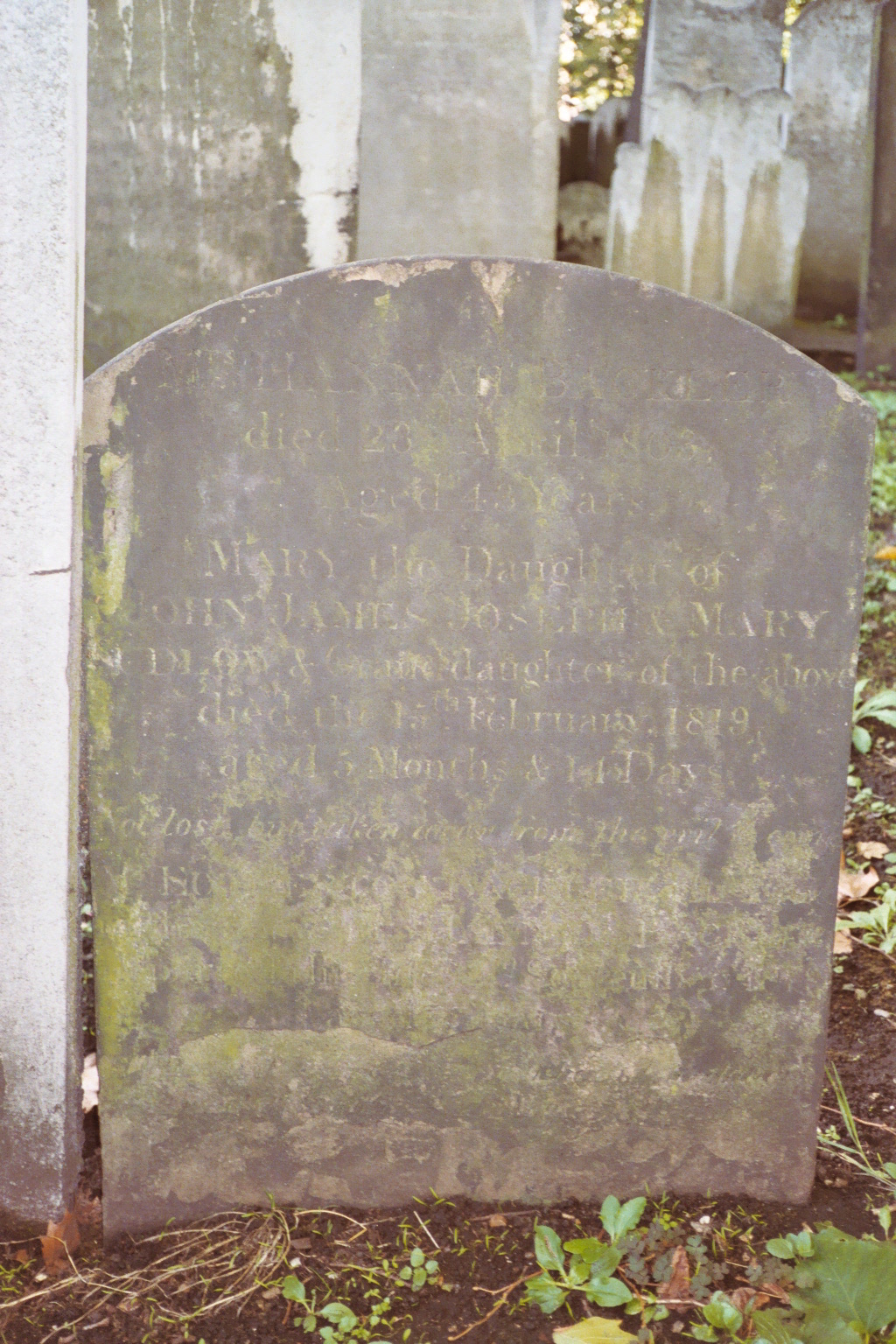
In which we look at the marriages and descendants of Mary Backler (1813-1882), Society of Apothecaries Clerk Sotherton Backler’s (1746-1819) grand-daughter, and oldest daughter of Samuel Backler (1784-1870), Sotherton’s first son by his second wife, Hannah Osborne.  Samuel married Mary Pellatt (1789-1857), daughter of Apsley Pellatt (1763-1826), ironmonger, and his wife Mary Maberly (1769-1822).  We will see much more of Samuel and his descendants in later blogs – he is my 3x great grandfather.  Here we consider a possible mystery around the parentage of Mary’s fourth child, Thomas Meriton Pellatt, aka Thomas Meriton Sargeant.

Mary Backler (1813- 1882married her cousin Henry Pellatt (1797-1860) of Ironmonger’s Hall on 18 March 1831 in St Mark’s Kennington, only 4 months before Henry would be sworn as an assignee in the affairs of Mary’s father Samuel, tobacconist of St James’ Place, who had been declared bankrupt and whose creditors included, among others, both Maberly and Pellatt relations.

CNV00036By the time of the 1841 Census, Henry and Mary were living in Hammersmith with their two young children, Henry Apsley Pellatt, and Victoria Mary Pellatt.  Their third child, William Cowper Pellatt, was born in 1842 and christened in Hammersmith. The 1851 Census found them in Roupell Street, very near to what is now Waterloo Station, and shown in recent years in the photo on the left.


And there, you might think, the family was complete.   Indeed, that is what the extensive family tree shows in the ‘Pedigree and Genealogical Memoranda Relating to the Family of Pellatt, by Maberly Phillips and published in two parts by Sussex Archaeological Collections Vol xxvii.

However, after a ten year gap, a fourth child was born to Henry and Mary.  He was Thomas Meriton Pellatt, born  15 July 1852, and christened at the nearby  St John the Evangelist Church on 8 August.  (I stood for many years opposite this church waiting for the 521 bus to take me to work on early mornings.)  This child does not appear on Maberly Phillips’ Pellatt family tree.  Could it be that the registered father – Henry Pellatt, solicitor, was not in fact his father?

Henry Pellatt died on 23 November 1860, aged about 63.  His wife Mary, then aged about 47, married with what might seem as unseemly haste. Less than two months after Henry’s death, on 3 January, 1861, in the parish church of  St Botolph Bishopsgate, she was wed to Thomas Waldo Sargeant, known as Waldo Sargeant.  I have not succeeded in finding the newly-married couple in the 1861 census, nor any of the offspring of Henry and Mary, including young Thomas Meriton Pellatt.  By 1871, however, Waldo Sargeant, 46, born in Devon. ‘draughtsman on wood’ is to be found in Carlton Grove, Clyde Terrace, Camberwell, with his wife Mary, 57, born Pentonville, with their son Thomas ‘do’ [ie, ditto – or Sargeant], aged 17, unmarried, violinist, born Lambeth, Roupell Street.

Had Waldo done the decent thing and informally made young Thomas his son?  Or could it be that Waldo was actually Thomas’ father?

By 1881, the marriage had clearly fallen apart.  Waldo was now a ‘designer in wood’, living with his ‘wife’ Alice, age 38 and born in Tralee, Ireland.  They were lodging in Holborn, where he is to be found ten years later as a ‘widower’, a few doors away.  Waldo was long-lived, and was to be found as a lodger in Hammersmith and then Fulham in the 1901 and 1911 Censuses.  His death was recorded in Camberwell in 1911.

But what of Mary – my 3x great aunt?  In 1881, while Waldo lodged with his ‘wife’ Alice in Holborn, she had taken up residence (perhaps refuge?) with her son William Cowper Pellatt and his wife Eliza, at 20 Union Street, Deptford St Paul – just south of the Thames near Greenwich.  Mary was styled a ‘widow’ – which she was, of Henry Pellatt, but NOT of Waldo Sargeant!  She died in 1882, and is buried in Ladywell and Brockley Cemetery, with her son William Cowper Pellatt, who died in 1899; his wife Eliza, who died in 1904, and two of their children – William Cowper Pellatt, who died in infancy, and Ernest Waldo Pellatt, who died aged 17 in 1885. His middle name Waldo – given to him while his grandmother Mary was still living with her then-husband Waldo Sargeant – could either indicate very close family links with Waldo – or simply be a mark of respect for Mary Backler/Pellatt/Sargeant’s husband!

IMG_2101Recently I became the proud owner of an extremely large and heavy volume complete with illustrations by Waldo Sargeant.   The prints in the volume are from original drawings almost all from the area around Lincoln’s Inn, the Strand and Holborn, with later ones in Putney and Fulham.  In this period, Waldo had abandoned ‘wood’ for drawing and painting.  There are no other records to be found of his artistic endeavours.

The print on the right clearly shows his signature and the date 1883 – after Mary’s death but presumably while he was still living with ‘wife’ Alice Sargeant.

IMG_2105

But back to Thomas Meriton Pellatt/Sargeant, the subject of this blog.  He and his wife Amy Lucas spawned no fewer than 11 daughters, over a period from 1878 to 1897.  A steady succession of Sargeant daughters was wed at St Mary Magdalen Church, Peckham.  However, anyone searching the records for the origins of their father, Thomas Meriton Sargeant, Professor of Music (or violin), as he was to appear in successive censuses, might not be certain that he is one and the same as Thomas Meriton Pellatt.  His omission from the Maberly Phillips family tree leads me to infer that he was not a Pellatt ‘in blood’ although his birth certificate suggests that he is.  A mystery.


10. The Apothecaries’ Barge and Admiral Lord Nelson’s River Funeral Procession

In which we look at preparations for the great river procession, and consider whether Sotherton Backler, Acting Clerk to the Society, might have ridden on the Society’s barge.

Nelson funeral procession

At a special Court meeting on 15 January 1806, the Master of the Worshipful Society of Apothecaries announced that a Clerk was to be elected ‘in the roome’ of Mr Robert Cooke, who had died. An election took place, and Sotherton Backler duly became Clerk, in addition to his roles as Accountant to the Navy Stock (the Society’s trading company set up to supply the Navy with apothecaries’ supplies), and Secretary to the Friendly Medical Society, to which post he had been elected on 25 June 1799. This was a social dining club, unique to the Society of Apothecaries. The membership was limited to 26 Assistants and Liverymen, plus the Clerk. They dined together four times a year, generally at the Crown and Anchor in the Strand. (Penelope Hunting, History of the Society of Apothecaries, 1998, p 195) Crown and Anchor
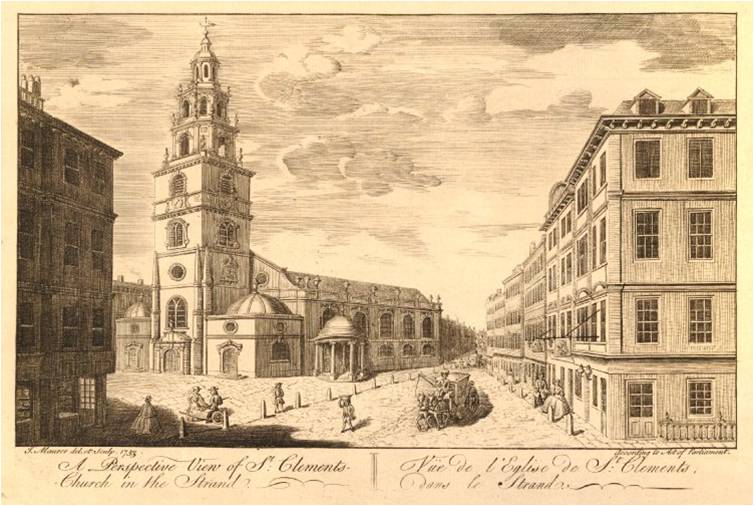
The rather grand four-story Crown and Anchor, on the Strand opposite St Clement Danes (you can see the sign on the right of the picture) had long served as a venue for meetings of well-to-do Londoners. It was the customary dining venue for fellows of the Royal Society, and was said to be ‘the birthplace of the general practitioner’.
It had an enormous Assembly Room and a grand dining room, and in the first decades of the 19th century it was known as a hotbed of radical politics.

The Barge – Lord Nelson’s funeral
As I scanned the Society’s Court Minute books, I was struck by the juxtaposition of Sotherton’s role as Acting Clerk – to be elected Clerk on 15 January 1806 – and arrangements for the Funeral of Admiral Lord Nelson.

This arguably could have been one of the biggest events in London in the first decade or more of the 19th century. Could my 4x great grandfather have ridden in the Society’s barge along with many others behind that carrying Nelson? At the very least I have no doubt that he and his children, including my 3x great grandfather Samuel Backler, would have watched the procession on 9 January as it made its way from Westminster to St Paul’s. Indeed, so would my Pellatt ancestors who lived at their glass showroom in St Paul’s Churchyard.

The Court of Assistants had a special meeting on 31 December 1805 to respond to the invitation of the Mayor of London to take part in the funeral procession on the Thames. The Clerk was directed to write to the Lord Mayor to say the request would be complied with, and the barge master attended to receive orders to prepare the Barge. It was ‘Ordered that Mr Platt do provide a Band of Music suitable to the solemn occasion’, and a special Committee was to sit each day at 1 pm to make arrangements.

The Society’s third and last barge had been built in 1765 and repaired in 1786. By 1802 it had been declared unsafe for the herbarising expedition to Greenwich, but it appears to have been seaworthy enough for the funeral procession! The papers of the day show just what a momentous event this was, first with the viewing of the body at Greenwich and then for the procession along the Thames on 8 January. Fairburn’s report of the funeral describes the order of the river procession, and vividly comments on the order of the day. The Society’s Barge appears last in the order of City Barges, which included in addition, those of the Drapers, Fishmongers, Goldsmiths, Skinners, Merchant Taylors, Ironmongers and Stationers.

On the 9th, the procession went from Whitehall to St Paul’s (of which the front end reached St Paul’s before the back end had left Westminster). Adverts proliferated for the hire of desirable and genteel viewing places along the route; and special stands were built in St Paul’s for the 12,000 or so people who attended the ceremony itself.

Nelson viewing adverts

The Morning Post of 7 January, 1806 advertised:
A large drawing room with two windows and a balcony in the Strand
First, 2nd, 3rd and 4th floor viewing of the entrance to St Paul’s and nearly up to Temple Bar – apply at the British Neptune Office, 119 Fleet St
A ‘long and commodious room with seats’ is being prepared at the Dundee Arms Tavern, Wapping
A commodious room in Fleet Street to accommodate 30 people has a back entrance from Lincoln’s Inn down Bell-Yard so the party may come and go at what hour they please

Later that Spring Sotherton Backler reported the expenses incurred in attending the funeral, which the Court Minutes in March 1806 showed in total amounted to £50-19-6.
Angell & Son, £6 – 15-6 [for food?]
The Barge £20 – 13 –
Music £ 9 – 9s
Wine, 3 doz £ 8 – 2s
Mr Kanmacher £ 1 – 11 – 6 [the Beadle]
Mrs Hodder £ 4 – 3 – 6 [the Butler]
Porters at Tower Wharf – 5s

We learn a little more detail about what was involved for a Livery Company Barge in the procession in the story of the Ironmongers, which reports that the ‘liverymen in livery gowns and mourning … were accompanied by a band of two flutes, four clarinets, two horns, two bassoons, a serpent, a trombone, a pair of kettle drums and two trumpets. The start was early, 8.30 a.m., so they were fortified by breakfast at the Hall, and refreshments were provided on Board.’ (p. 99 A History of the Ironmongers Company’ by Elizabeth Glover, 1991)

As with many other Livery Companies, the Society eventually abandoned ownership of a barge, with its sale in 1817 and the demise of the Barge House at Chelsea Physic Garden.

There appears to be no record at the Society of who actually travelled on the barge that eventful day. But my ancestor Sotherton Backler was surely involved in some way as – although this remains to be researched – were the soon-to-be Backler in-laws, the family of Apsley Pellatt, glassmaker and lately Master of the Ironmongers.

In my next blog I will depart from this chronology of the Sotherton Backler family, and explore the mysteries around the life of Thomas Meriton Pellatt, son of Sotherton’s grand-daughter Mary Backler, and her husband and cousin, Henry Pellatt – or was there a different father?? I’ve wanted to tell this story for a while now – and the time seems ripe.

9. The Family of Sotherton Backler 1746-1819 with his wives Frances Harris and Hannah Osborne

I which I set out the families of Sotherton Backler with his first wife, Frances Harris and his second wife, Hannah Osborne.  I know little about the wives, but quite a bit about their offspring!  The story becomes quite complicated for some of them, so I sketch just a very brief outline here. Later blogs will follow the different families in turn.  I will look at my 3x great grandfather Samuel Backler and his descendants after I have covered all the others.  But in my next blog I will trace what is known of the career of Sotherton Backler, Clerk to the Society of Apothecaries.  His period of office spanned (just) the funeral of Admiral Lord Nelson, and the Apothecaries Act of 1815m a very important landmark in the regulation of the medical profession.

IMG_3340 (2)

Sotherton Backler, Clerk to the Worshipful Society of Apothecaries, married twice, first to Frances Harris on 11 February 1777, at St Mary’s Stoke Newington (the old St Mary’s, pictured).  Witnesses were Hannah Harris, John Freeman and Nathl Jennings.  John Freeman was most likely Sotherton’s brother in law, married in 1770 to his sister Ann.

Four children of Sotherton and Frances Harris

Sotherton and Frances had four children:

Sotherton Backler (1778 – 1786).  Nine year old Sotherton was buried at St Andrew by the Wardrobe, the companion church to St Ann Blackfriars, on 30 December 1786 – not a very happy Christmas for the Backler family, since this burial took place just just 14 days after the burial of Sotherton’s infant half-brother Thomas (see below).

Frances Backler (1779 – 1833).  Frances fared better than her older brother Sotherton.  She was christened on 23 May 1779 at St Ann Blackfriars, the local church for the Society of Apothecaries.  She was buried at Bunhill Fields Burial ground in October 1833, having been brought from Hampden Street, Somers Town.  Several Backlers and related families seemed to have lived in this area, which is east of Euston Station and north of Euston Road.  Hampden Street can be seen on the map through the link below.

Hannah Backler (c. 1780-1870) and John Backler (c. 1780-1846) These two were christened on 11 June 1780 at St Ann Blackfriars – were they twins?  Hannah later lived at the Jeffrye Almshouses with her half-sister Sarah Anne.  John was the first of Sotherton’s sons to become an apothecary, and will also feature in a later blog.  He and his descendants have fascinating stories to tell.

Is it possible that Frances died at or soon after the birth of the twins?  No death or burial record for her has been traced to date.

Nine children of Sotherton and Hannah Osborne

Sotherton then married Hannah Osborne (c. 1763 – 1803) on 3 October 1782, in Bocking Essex.  Could she have been the daughter of Thomas Osborne, whose signature appeared alongside Sotherton’s in the London Sessions Court document mentioned in my last blog?  So far it has not been possible to trace details about Hannah, although there are some possible leads in Bocking awaiting perusal.

Hannah and Sotherton had nine children:

Sarah Ann Backler (c.1783-1857) was the eldest, christened at St Mary Stoke Newington on 10 August 1783. Sarah Ann died in 1857 at the Jeffrye Almshouses in Shoreditch.

Samuel Backler (1784-1870) – my 3x great grandfather, also christened at St Mary Stoke Newington: a not-quite-qualified sometime apothecary, tobacconist and chemist, about whose business, bankruptcy and eventual demise we will hear about in blogs to come. Samuel married Mary Pellatt in 1810.

Thomas Backler – born and died in 1786 – christened at St Ann Blackfriars on 8 May 1786, and buried at St Andrew by the Wardrobe, 16 December 1786 – just 14 days before his older half-brother Sotherton.  Both were buried in the church.

Joseph Backler – christened January 1788, died 1848.  A famous artist in stained glass, whose son Joseph became a noted convict artist in Australia – much more about them and others of Joseph’s offspring to come. Joseph married Jane Cowie.

Elizabeth Backler – christened 25 June 1789 at St Ann Blackfriars and buried 14 May 1791 at St Andrew by the Wardrobe

Mary Backler – christened 13 April 1791 at St Ann Blackfriars. Married to John James Joseph Sudlow, Solicitor. Died in Southampton 7 March 1860

Benjamin Backler – christened 18 June 1793 – nothing further known about him

Jane Ozella Backler christened 17 February 1795. Married Daniel Burton.

Thomas Osborne Backler christened St Ann Blackfriars 3 August 1796. Buried St Andrew by the Wardrobe 2 December 1796.  Given the traditional naming patterns in this family, and the fact that there was already one son ‘Thomas’, born and died in 1786, I feel the name of ‘Thomas Osborne’ was likely that of Hannah’s father.  This remains to be proved.

Sotherton Backler christened St Ann Blackfriars 4 August 1798.  Died Blatherwycke Northamptonshire 19 November 1875.  No children but lots of information about the Rev Sotherton Backler, and his links with different branches of Backler descendants, including the family of his aunt Mary Backler, married to John James Joseph Sudlow; and the family of his half uncle John Backler, cupper, who had had to flea to Paris to avoid court dealings in around 1820.  As far as I know, his was the last use of the name ‘Sotherton Backler’.

8. Sotherton Backler 1746-1819 Clerk to the Society of Apothecaries

Born in July 1746, and christened in Sr Giles Cripplegate, Sotherton Backler was the son of apothecary Sotherton, and his wife Ann Ashley. Young Sotherton had attended St Paul’s School, and would have been 17 years old when his father died in 1763. I do not know how or with whom he did any apprenticeship, nor what was his occupation before he was made free of the Society on 2 October 1781 [1]. He was elected to the Society’s Livery in 1796, and his son John (by his first wife Frances) was apprenticed to him. How and where he qualified as an apothecary remains a mystery. His distinctive signature appears on a City of London Sessions document in 1783 (http://hri.shef.ac.uk/san/pl/SL/PS/LMSLPS15094/LMSLPS150940014.jpg)

Sotherton Backler signature, London Court of Sessions, 1783.

Sotherton Backler signature, London Court of Sessions, 1783.

Was he a Clerk or an Accountant?

Over the last decade of the 18th century, Sotherton gradually took on more responsibility in the Society. Following the presentation of an address by the Master and Warden to His Majesty the King in 1795, it was reported that the address ‘was very Masterly wrote by Mr. Backler on vellum and it was resolved that he be desired to accept a guinea for his trouble’.[2] The Court Minute books show that he received payments for Clerk’s duties as early as 1796, shortly after he was admitted to the Livery. From 1797, regular payments were made annually to Sotherton Backler in respect of his ‘officiating as Clerk’. The situation was formalised at the Court of 16 December 1802, when Mr Cooke, ‘on account of age and indifferent state of health, was granted permission to employ a Deputy. Sotherton Backler was duly summoned and so appointed, the compensation for the role to be agreed between Mr. Cooke and himself’. The Minute Book of this date displays a dramatic change in handwriting!

On 18 March 1803, it was ordered that the Clerk’s office be properly fitted up for transacting the Business of the Corporation. This date was just before the death in April of Sotherton’s second wife, Hannah Osborne. He had produced a total of 14 children with his two wives, the youngest of whom was only 5. I speculate that he may have had four or five children living with him, the oldest his daughter Frances, aged about 22. It could be that she took charge of the young family while Sotherton carried out his Clerkly duties.

At a special Court on 15 January 1806, the Master announced that a Clerk was to be elected in the roome of Mr Robert Cooke, who had died. An election took place, and Sotherton duly became Clerk.

It is also important to note here that in addition to being Clerk, Sotherton was Accountant to the Navy Stock (the business arm of the Society, which operated contracts for the Royal Navy), and Secretary to the Friendly Medical Society.

[1] 8206/3 Registers of freedom admissions. Stamp duty books. 1785-1814. Seen on microfilm at Guildhall Library.
[2] Society of Apothecaries Court Minute Book: 8200/9 p. 225 16 Decr 1795

7. SOTHERTON BACKLER, BEADLE OF THE WORSHIPFUL SOCIETY OF APOTHECARIES, 1757-1763

In which we look at the role of ‘Beadle’ in the City Livery Companies, and consider the Society’s concerns about this office some years after Sotherton’s death.

Image

Sotherton Backler was elected Beadle (or Bedel) to the Society on the quarterly Court Day, 13 October 1757.  He succeeded the well-known apothecary, Mr John Pocock, who had resigned his position as Bedel on his appointment as Dispenser to the Royal Hospital at Greenwich.  Pocock’s wife, who had been Butler to the Society, also resigned her position, paving the way for Sotherton’s wife Ann to be appointed Butler, ‘in her roome’.[1]

On the day of the election of the Backlers to their new roles, among those on the Court of Assistants was Mr. Daniel Hanchett, with whom Sotherton had served his apprenticeship. Hanchett became Renter Warden in 1759, Upper Warden in 1760, and Master in 1761 – so former Master and Apprentice would have had a very different relationship during this period as a different kind of Master, and Beadle.

I think it likely that Sotherton and Ann lived in the Hall during their time as Bedel and Butler. Court Minutes state:

‘Ordered that the Fixtures left by Mr Pocock the late Beadle in his House amounting to £6 – 7 – 0 be bought by the Company for the use of the present Beadle and that Mr Pocock be paid £2-4-0 towards the repairs done by him to the said House, when he was chosen Beadle, as also £3 for the three Quarters Allowance for a suit of Cloaths, due when he resigned his place.’[2]

 Sotherton and Ann’s daughter Ann would have been about 16, and not yet married to John Freeman; young Sotherton would have been only 11 and attending St Paul’s School, conveniently around the corner from Apothecaries’ Hall.  If still surviving, Elizabeth would have been about 9.

What was the Bedel?

For someone not familiar with the workings of the City Livery Companies, the role of the Beadle was something of a mystery to me. According to the website of the Beadles of London:

The Livery Companies, as they evolved, needed a point of contact between the Master, Wardens, and Court of Assistants and the Livery in general. They therefore appointed (and paid for) a Beadle, who took care of the Company’s meeting place (‘Hall’), called the Court members and/or Livery together on behalf of the Master, and enforced any disciplinary measures decided by the Court.

The Beadle would also find suitable apprentices, and would organise the social and ceremonial functions. He was, in summary, a policeman, an almoner, a friend, social worker and communicator.

He would be issued with a Staff of Office, often wrongly called a mace, with which to protect the Master and enforce discipline. The Staff is usually a tall one so that it could be used as a rallying point at Common Hall etc. when the Livery was summoned to “Attend upon the Master”.  (http://www.thebeadlesoflondon.com/Pages/OurHistory.aspx)

I was interested to find that in 1804 – 38 years after Sotherton’s death – the Court of the Society of Apothecaries heard a report of the Committee which had been set up at the request of the then Beadle, Frederick Kanmacher, to look at the duties of the Beadle.[3]  Kanmacher had asked for an increase in his emoluments and for an assistant in performing his duties.  The report sheds light on the role of a ‘Beadle’.

Mr Kanmacher had been Beadle for almost 30 years, having assumed office some ten years after Sotherton Snr’s death. His conduct and demeanor had been ‘uniformly attentive and respectful’.  The Committee had considered the duties of the Beadle to be [my bullets]:

  • ‘to receive and carefully lay before the master and Wardens whatever Precepts may be addressed to the Company
  • ‘to deliver Summonses for Attendance to the Members personally
  • ‘to attend on the General and Private Courts of the Society and to introduce such Persons as have Transactions therein
  • ‘to attend all Meetings of the Society whether collectively assembled or held in Committee and deputations, and to take and carry into Effect whatever Directions & Orders, The Court or the Master or Wardens may think proper to confide to his Care.’

‘The Committee likewise deem his Residence to be requisite & indispensably necessary in the Apartments which are allowed for his use, that Applications or correspondences connected with the Interests of the Company immediate or eventual may be received with Certainty and delivered with Care to the person concerned.

‘As your Beadle unquestionably is an Officer of much Responsibility and his Notoriety is acknowledged in the municipal Concerns and Arrangements of the Corporation of London, it is of further regard that he should be a Person of Decorous Manners and of Gentlemanly Deportment.

 ‘… Duties of the Beadle are so obviously indentified [sic] with the Respectability and Interests of the Society …’

Given all of the above, the Committee had gone on to examine the annual average fees/duties of the Beadle over the past 5 years.  They showed a range of fees and emoluments, which could change from year to year, and which were accompanied by a Salary of just £20.  The income was divided into categories which can be summarised as:

Customary and ancient fees of right, in 1799 totalling £27 5s, for attendance at Private and General Courts, Bindings, Admissions to Freedom or Livery or Court; attendances at the Guildhall and St Paul’s; Garden and other Committees; General and Private Herbarizings; Botanical Excursions; Master’s Day; Lord Mayor’s Day; Searches; and Examinations of Dispensers.

Optional payments included £24 3s as annual fees from Members of the Society

Salary and Laboratory gratuities included a gratuity from the Laboratory Stock [Company], £33 12 s for ‘providing assistants’; £9 19s 6d for ‘Appraisements’; Salary £20; and ‘attendance in the Navy Counting House’, £60 4s 6d, this last said to be a one-off emolument, not to be repeated.

The total of all of these was £182 11s.

 Two types of income caused the Committee particular concern. The first was the ‘optional fees’ from members of the Society, about which the Committee said it was ‘Disgraceful in the Beadle and discreditable to the Company’ and should never have been permitted and ought to be abolished forthwith.  The second was the payment regarding provision of assistants and making appraisements.  The Committee said: ‘This Emolument is presumed to arise from concerns not identified with the Company’s transactions. If this Supposition is correct the Company without manifest Impropriety cannot avail themselves of the Fruits of an Industry unconnected with their Bedle’s duty.’

 Given all this, the Committee concluded that an annual salary should be paid to the Beadle, as follows:

 ‘So far from the Beadle’s Emolument having kept pace with the prodigious advance of all the Necessaries of Life within the last Twenty five Years, it is a Fact that the Profits of the Office have been considerably diminished with that Period…The committee report that the Duties of Attendance of the present Beadle justly deserve to be compensated by an annual Emolument of One Hundred and Twenty pounds…and that the Beadle be restrained from accepting Gratuity or tips from Members of the Society without seeking permission from the Court or Master and Wardens.’

All this was accepted by the Court and by Mr. Kanmacher, these proceedings being overseen and written up by the new Deputy Clerk, Sotherton Backler, son of the Beadle of that name.  How much of the above would have been relevant 35 years previously remains open to question, but the broad outline of duties and the many attendances required of the Beadle would no doubt have been similar.

Check out this website for a summary of the role of a modern-day Beadle: http://www.londontoastmaster.com/toastmastersblog/the-livery-company-beadle/

 Sotherton Backler’s death; Ann remains butler

Courrt Minutes of 28 April 1863 report the death of the Beadle, and the majority election of his successor, Richard Reynell.  Ann Backler had petitioned the Court to remain Butler, and this was granted. She was to have a salary of £6 per year and ‘be admitted to the first vacant Pension’.  The Society had a fixed number of pensions at its disposal, and Ann Backler would have had to wait until one of these came free.  Her term as Butler ended with her death, reported in the Court Minutes of 17 December, 1868.

With Ann’s death we pause to allow Sotherton Jnr to become a member of the Society, and then Deputy Clerk and Clerk.  In my next blog I will introduce him and his rise to the role of Clerk. 


[1]Minute Book, Court of Assistants, 27 September 1757.

[2]Ibid., 16 March 1758

[3][3]The following discussion about the Beadle’s role and remuneration is drawn from Court Minutes, 8200/9,  22 August 1804, pp 393-398.

6. The Family of Sotherton Backler, Apothecary, and his wife Ann Ashley

In which we look at the births (and too many deaths) of the children of Sotherton Backler and his wife Ann Ashley, later to become, respectively, Beadle and Butler of the Worshipful Society of Apothecaries

This family illustrates the perils of infancy and childhood in 18th century London, and introduces us to some unusual (and unexplained) names.

Sotherton Backler, Citizen and Apothecary

      c. 5 Feb 1703/4, Ashwell, Herts.,  d. 28 April 1763

      m. Ann ASHLEY 5 July 1732 1732 at St Antholin, Budge Row, City of London.  ‘Sotherton Barker [or Backer sic] of St Giles’ Cripplegate London Batch and Ann Ashley of St Olive [sic] Jewry London Spinster married by Licence by Mr Lande.’   Ann Backler died December 1768

Ozell 1733-1733. Little Ozell died of ‘rising lights’, according to the parish register of St Giles Cripplegate in London. ‘Rising lights’ were any obstructive condition of the larynx or trachea (windpipe), characterised by a hoarse, barking cough and difficult breathing, occurring chiefly in infants and children. 

What’s in a name?  Who can explain where the names ‘Ozell’ and ‘Annozella’ came from? There is no sign of these names in Backler families in East Anglia.  Could the names have come down from the Ashley family?

Annozella 1734/5-1736.  Annozella died of smallpox, but perhaps she need not have done so.  By this date, medics had begun ‘variolation’ (inoculation with smallpox virus), a practice which was more widespread on the European continent than in England.  Jenner’s vaccine remained some way off (1795), but although there were hazards in the variolation process (some of those who were inoculated died of the disease, or of infections acquired through the inoculation process), the case fatality rate was 10 times lower than in naturally occurring smallpox .  The practice was slow to catch on in England, and even at the end of the 18th century, the death rate from smallpox in infants was 80%.  There was probably little the Backlers could do to save their small child. 

(source downloaded 19 April 2014: http://www.ncbi.nlm.nih.gov/pmc/articles/PMC1200696/)

Sotherton 1737-1737.  It is possible he died of ‘teeth’. There is an entry in the St Giles Cripplegate register for the burial of ‘James Sotherton’, of ‘teeth.  In the absence of any other record for this Sotherton before the christening of ‘our’ Sotherton some years later, one could speculate that this entry refers to this Sotherton – speculation only!

Jane Ozella 1738/9-1741/2  Jane died of consumption.

Ann 1741 – 

      m. John Freeman 12 July 1770 at St Andrew by the Wardrobe/St Ann Blackfriars, witnessed by S Backler and Sarah Rowley. Nothing more is known about Ann and John.

Ozella 1743/4-1745 – died of ‘tooth’

Sotherton  b.  28 July 1746, died 1819 Apothecary

      m. (1) Frances Harris

      m. (2) Hannah Osborne 3 Oct 1782. She died 23 April 1803

Elizabeth 1748/9 –  her fate is not known. It is possible she married.

Samuel 1753-1755 died of measles

In my next blog I will look at Sotherton senior’s rise to the post of Beadle of the Society of Apothecaries.  It is possible that young Sotherton, Ann, and possibly Elizabeth, lived with their parents at the Society, although they may have resided elsewhere with their parents having just an office or apartment from which they carried out their duties in the Society.

5. Sotherton Backler and the trial of Elizabeth Canning

In which I describe how Sotherton Backler, Apothercary, gave evidence at the trial of Elizabeth Canning on 24 April 1754

The trial of Elizabeth Canning, 1754

The trial of Elizabeth Canning, 1754

Old Bailey records show that while living in Aldermanbury, Sotherton became involved in one of the most notorious criminal cases of the time, giving evidence in 1754 about his attendance the previous year on servant girl Elizabeth Canning, who had claimed to have been kept prisoner for a month in a house of ill repute in Enfield. Her evidence had caused her supposed abductor to be sentenced to be branded and imprisoned, and another defendant to be sentenced to hang for stealing Canning’s stays – she was subsequently pardoned. The case had generated huge controversy, not least in the notorious Grub Street Press, and in 1754, after investigations by Sir Crisp Gascoyne, Lord Mayor of London, Canning herself was tried and convicted for perjury, and was transported to America. The truth of the case was never determined for certain, but some said that Canning had arranged a disappearance to mask an unwanted pregnancy.

 Proceedings of the Old Bailey, 24th April 1754, page 47:   

Mr.  Backler, an apothecary in Aldermanbury, deposed, he was applied to by the girl’s mother, and went to her on the 30th of Jan. he found her extremely low and could scarcely hear her speak, with cold clammy sweats in her bed, complained of being very faint and sick, and of pains in her bowels, and of having been costive the whole time of her confinement; he ordered her a purging medicine, but her stomach was too weak for it, and could not bear it; he then ordered her a glyster that evening, and on the 3d of February another, the latter had some little effect; he ordered her another on the 5th, that had no effect at all: and she continuing very bad and in great danger, Dr. Eaton was sent for on the 6th; he wrote prescriptions for her for fourteen days, of diuretics and gentle cathartic medicines; that she was tollerably well in about a month. When she was at the worst her face was remarkable, her colour quite gone, her arms of livid colour spotted: and that when he heard she was gone to Enfield-wash, when the people were taken up, he thought her not able to perform the journey, and thought it extremely improper for her to undertake it, she being very much emaciated and wasted.

4. Sotherton Backler (1704-1763) Apprenticeship and Freedom

220px-Sweedons_passage_grub_street[1]The first Sotherton’s apprenticeship and freedom

In which we take a look at Sotherton Backler’s apprenticeship to Daniel Hanchett, Apothecary of London, and look at the neighbourhood where they lived.  We note Sotherton’s marriage and the births (and, sadly, deaths) of their many children.

In her History of the Worshipful Society of Apothecaries (1998, p 194), Penelope Hunting notes that ‘the rising status of apothecaries has been traced to the recruitment in the early 18th century of a ‘high proportion of apprentices who were sons of clergymen’. There was a high value placed at that time on obtaining a good apprenticeship and ensuring a secure trade for such a younger son.

Sotherton was apprenticed  to Apothecary Daniel Hanchett in 1721 and was made ‘free’ of the Society of Apothecaries in 1732.  His apprenticeship would have been served at Hanchett’s premises in Coleman Street, which runs north to south just east of the Guildhall.  Once the apprenticeship was completed,   Sotherton’s address was at nearby Fore Street from 1738-1756. Apprentices needed to be proficient in general knowledge and Latin, and Sotherton would have had practical training in pharmaceutical skills, alongside attending lectures and classes, anatomical dissections, home visits and instruction in botany and chemistry.

Presumably upon completion of his apprenticeship, Sotherton had both a shop and a practice which among other things would have involved tending to the poor of the area. I have found no record to date of his premises or business, but John Strype’s survey of 1720 (updating Stow’s work) says of Cripplegate without the Wall:[1]

‘This is a large Tract of Ground, containing several Streets, and all crowded with Courts and Alleys. The chief are Forestreet, the Postern street, Backstreet in little Moorfields; Moor lane, Grub street, Whitecross street, Redcross street, Beech lane, Golden lane, Barbican, and Jewen street. Of these in Order.  Forestreet, pretty broad, and well inhabited, runneth from the North end of St. Giles Cripplegate Church, unto Moorlane, Eastwards; and then it falls into Postern street, which leadeth to Little Moorfields, against new Bethlem.’

The image above of Sweedon’s Alley, Grub Street is from around 1777, and perhaps illustrates the environment in which Sotherton lived earlier in the century.[2]

Apothecaries of the time had a mixed reputation.  A contemporary document referred to ‘the mere apothecary – a Creature that requires very little Brains’.[3]  Many people were suspicious of the apothecary-doctor, whose potions might poison as much as cure.  The lack of understanding of illness and disease at the time meant the use of traditional herbal (galenical) and other remedies (for instance mercury for venereal disease), which could do as much (or more) harm as good.  Yet the public sought out apothecaries, often because most people could not afford the expense of the university-educated doctor.  

Sotherton’s marriage to Ann Ashley in 1732 resulted in the birth of 9 children, but the parish records of St Giles Cripplegate show that they were mostly short-lived.  How sad it must have been for the apothecary father to be unable to avert the deaths of his children from ‘rising lights’ (any obstructive condition of the larynx or trachea (windpipe), characterised by a hoarse, barking cough and difficult breathing, occurring chiefly in infants and children); small pox; consumption; ‘tooth’; and measles.  Of the nine children born, only two (Ann and the second Sotherton) and perhaps a third (Elizabeth) survived into adulthood.


[2] http://www.motco.com/index-london/SeriesSearchPlatesFulla.asp?mode=query&title=Grub+Street&keyword=1820&x=11&y=11  From Smith’s Ancient Topography of London, 1815, said to be drawn around 1791, the building taken down in 1805.

[3] Cited in Penelope J. Corfield. From Poison Peddlers to Civic Worthies: the reputation of the apothecaries in Georgian England. Social History of Medicine22 (2009), pp 1-21.  The quote is taken from: R. Campbell. The London Tradesman: Being a Compendious View of all the trades, professions, arts.  London, 1747.


3. Samuel Backler – lapsed schoolmaster of Ashwell

In which I describe a rather less than flattering account of the career of Samuel Backler as schoolmaster of Ashwell, Herts.

In my first blog I wrote about Samuel Backler, Vicar of Newnham, and later of Ashwell in Hertfordshire. Like many vicars, he took on the role of schoolmaster as well, assuming this role in 1683 while he was vicar of Newnham, a neighbouring parish. The school was owned by the Merchant Taylor’s Company of London and, according to an article about the school by David Short in the Spring 2010 edition of ‘Herts Past & Present’, Samuel Backler’s tenure as schoolmaster was not without its problems. The Minute books of the Company record that complaints were made about ‘severall misdemeanors’ committed by Mr Backler in around 1693 – the nature of which was not divulged. Indeed, a few years later the Company voted Mr Backler £25 to enlarge the schoolhouse – a building still standing in Mill Street, Ashwell. When Samuel Backler’s son Samuel went up to Cambridge, he was said to have been educated at Ashwell School – presumably by his father. But by 1718, two years before Samuel Sr’s death, the parishioners of Ashwell complained to the Merchant Taylors that there had been no school at Ashwell for several years, and that the schoolhouse was let out. A month after the Company sent a stern letter to Backler, suggesting that for the ‘notorious neglect of your office you be suspended from the said office of Master and the salary thereto belonging…’, his resignation was accepted by the Court of the Company.
The author of the article speculates that Samuel Backler, having become Vicar of Ashwell in 1714, may have moved from the schoolhouse to the Vicarage, and then let out the schoolhouse.
As to his neglect of teaching duties, no explanation is available.

The image of Ashwell School House is taken from: http://www.ashwell.gov.uk/pictures2.htm

2. Discovering the Backlers of Apothecaries Hall

DISCOVERING THE BACKLERS OF APOTHECARIES HALL

Apothecaries Hall

Apothecaries Hall

My first blog about the Backlers – ‘Samuel Backler, Vicar of Ashwell, Herts’ – set out my knowledge to date about my 6x great grandfather, Samuel Backler. This blog describes how I discovered his identity, and also that of four of his descendants – all apothecaries ‘of Apothecaries Hall’.

Ever since my mother and I had found some precious marriage certificates at the old family history centre in London’s St Catherine House, I had known that my 3x great grandfather was Samuel Backler, who in 1810 had married Mary Pellatt, daughter of the famous glassmaker Apsley Pellatt. Searches on the surname ‘Backler’ in The Times of London at around that date showed that, in advertising his wares, Samuel described himself as being ‘of Apothecaries Hall’, with cures and treatments available from his elaboratory in Bedford Street, Covent Garden. I knew nothing about apothecaries, nor about City Livery companies. I had a treat in store.

Backlers at the Society of Apothecaries
When I mustered the courage in 2009 to enquire about Samuel from the Society’s archivist, I was delighted to received the following reply from the then archivist:

`I write in reply to your email enquiry … concerning your ancestor Samuel Backler. I don’t think you realise that he was a third (and last) generation Backler connected with, and a member of, the Society of Apothecaries. His grandfather So(u)therton Backler had been Beadle and his father (same name) the Clerk. I don’t think Samuel completed his apprenticeship and so was not technically a qualified apothecary…I think it would be best if you came to the Hall to consult the records yourself …’

My first visit to Apothecaries Hall was like stumbling into an ancestral (and historical) wonderland. There was information about four Backlers, from the so-called ‘Cecil Wall cards’, so named after the Clerk to the Society who sometime in the early 20th century indexed references to the Society’s members from documents such as Court Minutes, apprentice registers and much more.

Two Sotherton Backlers, plus John and Samuel
Sotherton senior’s card took me back two generations from Samuel, and provided invaluable information in several respects. The card showed that the first Sotherton (1704 -1763) was the son of the Rev. Samuel Backler, of Ashwell, Herts and that Sotherton was apprenticed to Apothecary Daniel Hanchett in 1721. Sotherton was made ‘free’ of the Society of Apothecaries in 1732, was elected Beadle in 1757, and died in 1763. His wife Ann (nee Ashley) had become Butler on his appointment as Beadle, and she continued in this role – and was also a Society pensioner – until her death in December 1768.

The Beadle’s son, also Sotherton, had become deputy Clerk in 1802 and was Clerk from 1806-1816, when, according to the notes, ‘the Society presented him with a piece of plate on his resignation, value 50 gns’. He attended the bicentenary dinner in 1817 as the Navy Accountant, and was elected Secretary to the Friendly Medical Society which post he held from 1799-1816.

The second Sotherton’s son Samuel (1784-1870) had been apprenticed in 1800 to Thomas Hall, but on his Master’s death, Samuel was released from his indentures and in 1805 gained the freedom of the Society by Patrimony. The records show that he was in the service of the Laboratory Stock, established many years previously to oversee and control the quality of the manufacture of chemical and plant-based medicines. In 1843, he withdrew from the Society – I suspect due to his waning fortunes, which had included bankruptcy as a tobacconist in 1831.

These three men were my 5x, 4x, and 3x great grandfathers.

But there was a fourth Backler – John Backler (c. 1780-1846), the second Sotherton’s son by his first marriage (and therefore Samuel’s half brother). John had been apprenticed to his father Sotherton, and further research through other sources showed that he had a troubled career, shortly after his father’s death in 1819 having to go to Paris to avoid court proceedings over his business dealings.

Armed with this information, I could investigate further the lives and careers of these four apothecaries – a topic about which I knew very little!

In my next blog I will look at the life and times of the first Sotherton Backler, and explore just what was meant in his role as ‘Beadle’ to the Society. After that I will look at the second (surviving) Sotherton who became first, Deputy Clerk, and then Clerk, from 1806-1816, and his involvement with arrangements for the Society’s participation in Admiral Lord Nelson’s funeral procession on the River Thames in 1806.

Further ahead, I will look at a trade issue arising in correspondence by the Society with the Army Medical Board in 1810-1811, concerning, among other matters, the quality of Peruvian Bark (or Jesuits’ Bark, or cinchona), and the coincidence of timing with the trade of the afore-mentioned Samuel Backler, my 3x great grandfather. 

In all of these blogs I will also describe what I know of these men’s families, finishing my stories of the Backlers with a look at the career of the 19th century cleric, Sotherton Backler, and that of his half brother, John Backler, apothecary.